Low Energy Affordable Meaningful ADU
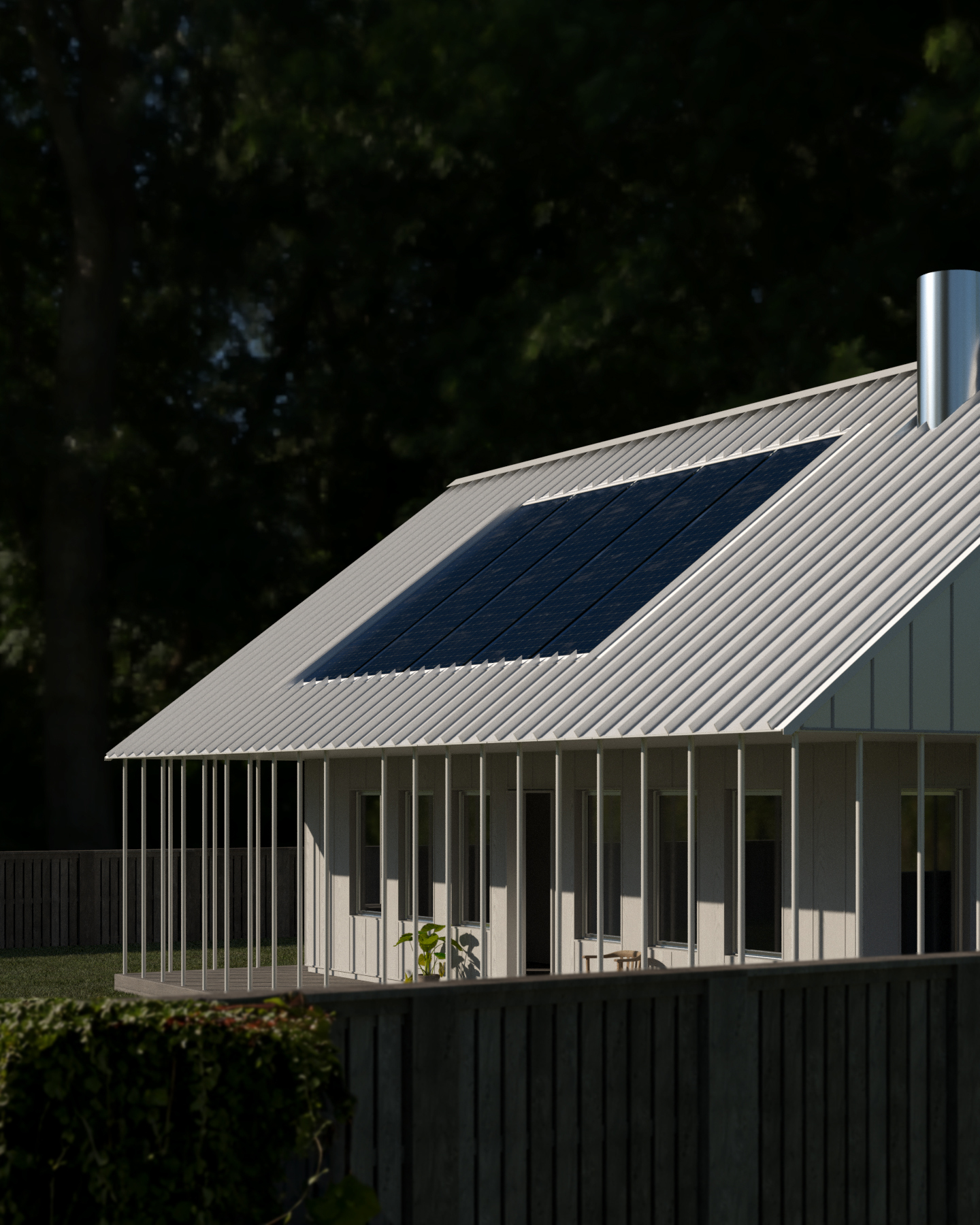
Design of systems-linked accessory dwelling units for Boston, 2025
This ongoing research investigates the extent to which architectural innovation and impact is inextricably linked to transformations in the systems — such as policy and finance – that regulate it. The work is concerned with the design of a meaningful, low-energy, and affordable accessory dwelling unit (ADU) prototype as well as the design of innovative financing and policy to enable it. In this way, architecture can make a positive and direct contribution to essential challenges of the housing crisis, namely the persistent racial wealth gap, by enabling low-to-moderate income households to access opportunities to increase their home equity through the addition of a low-energy housing unit.
The research takes the form of an ongoing case study with the City of Boston with the goal of rapidly translating learning outcomes into municipal policy and program. Learn more about the project here. The project involves rigorous urban analysis to assess ADU capacity and impact; design documentation for an ADU that can be adopted across three construction types and contains elements (such as well sections) that can be utilized as proxies for pre-approved construction types within the municipal permitting process; collaborative design of a term sheet for a financial product that has been adopted by several local banks; design of a process for batch delivery and technical assistance for middle income households.
The research also asks some larger questions about contemporary design practice and the discipline of architecture itself:
How can thoughtful systems-linked architecture enable deep transformation in energy use and our relationship with the buildings that produce it? To what extent must the practice of architecture expand to or coordinate with the design of technology, finance, and policy systems to enable widespread cultural, social, and environmental change? When does architecture stop becoming architecture and give way to the systems that enable and regulate it? How can architecture become an agent of change within and upon these systems?
Role: Principal Investigator and Design Director
Research Team: Maya Adachi, Pablo Castillo Luna, Connor Gravelle, Clara He, Ana Merla, Charu Singh, Alec Wagner
Municipal Partners: The City of Boston Mayor’s Office of New Urban Mechanics, The City of Boston Housing Innovation Lab, The City of Boston Home Center
Funding: We are grateful to the Harvard Center for Green Buildings and Cities as well as the Rappaport Institute for Greater Boston for their support of this ongoing effort to make change through applied research.


