Systems-linked Architecture
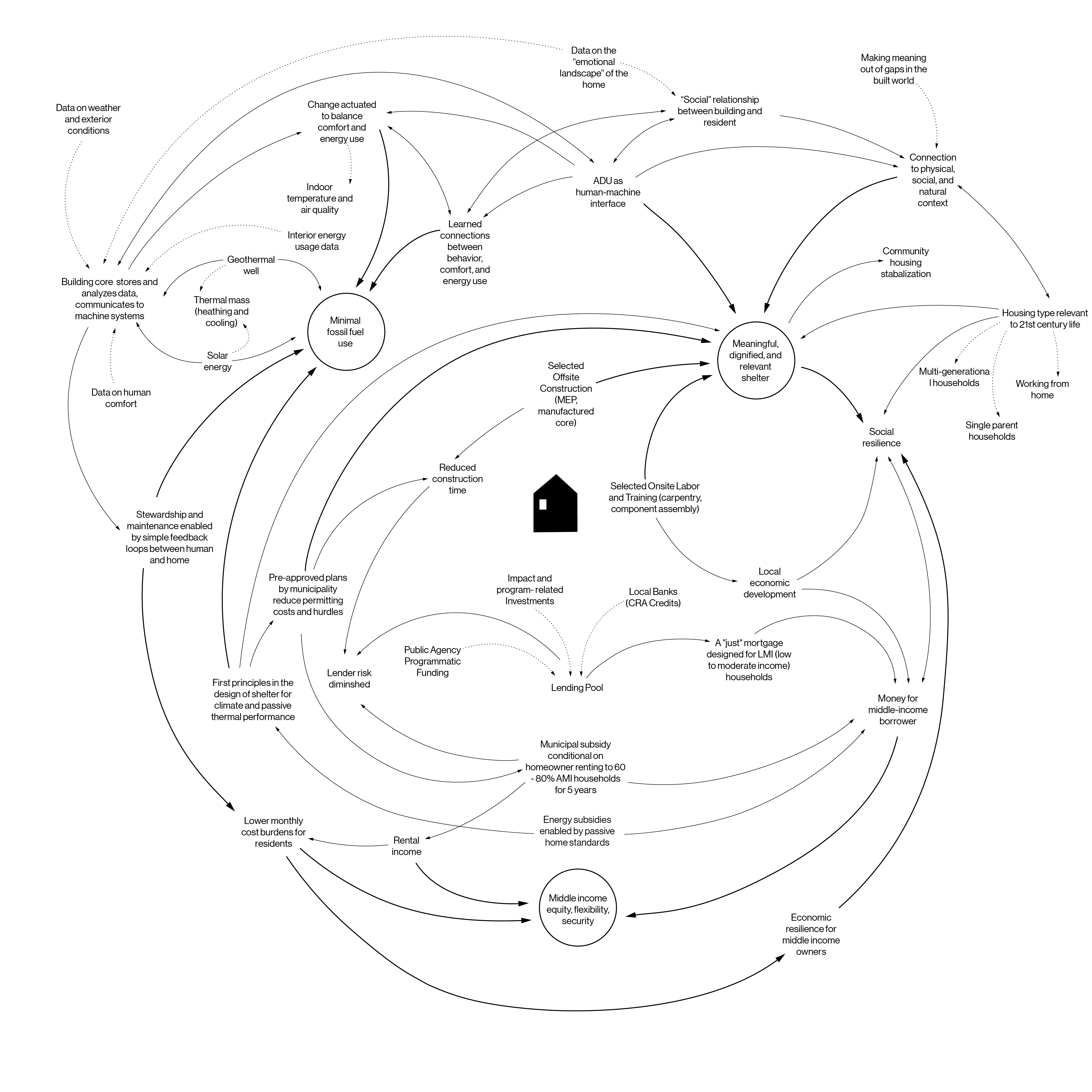
Architecture as both artifact and systems design, 2024
To what extent is architectural innovation and impact is inextricably linked to transformations in the systems—such as policy and finance—that regulate it? To what extent must architectural intelligence concern itself with issues of financing, policy, and energy consumption in a time in which these seemingly disparate territories of knowledge are inextricably bound to architectural form? To what extent is architecture both the means and the end in the pursuit of a low energy, affordable, and culturally meaningful built environment? Such questions are at the root of establishing design agency in the 21st century.
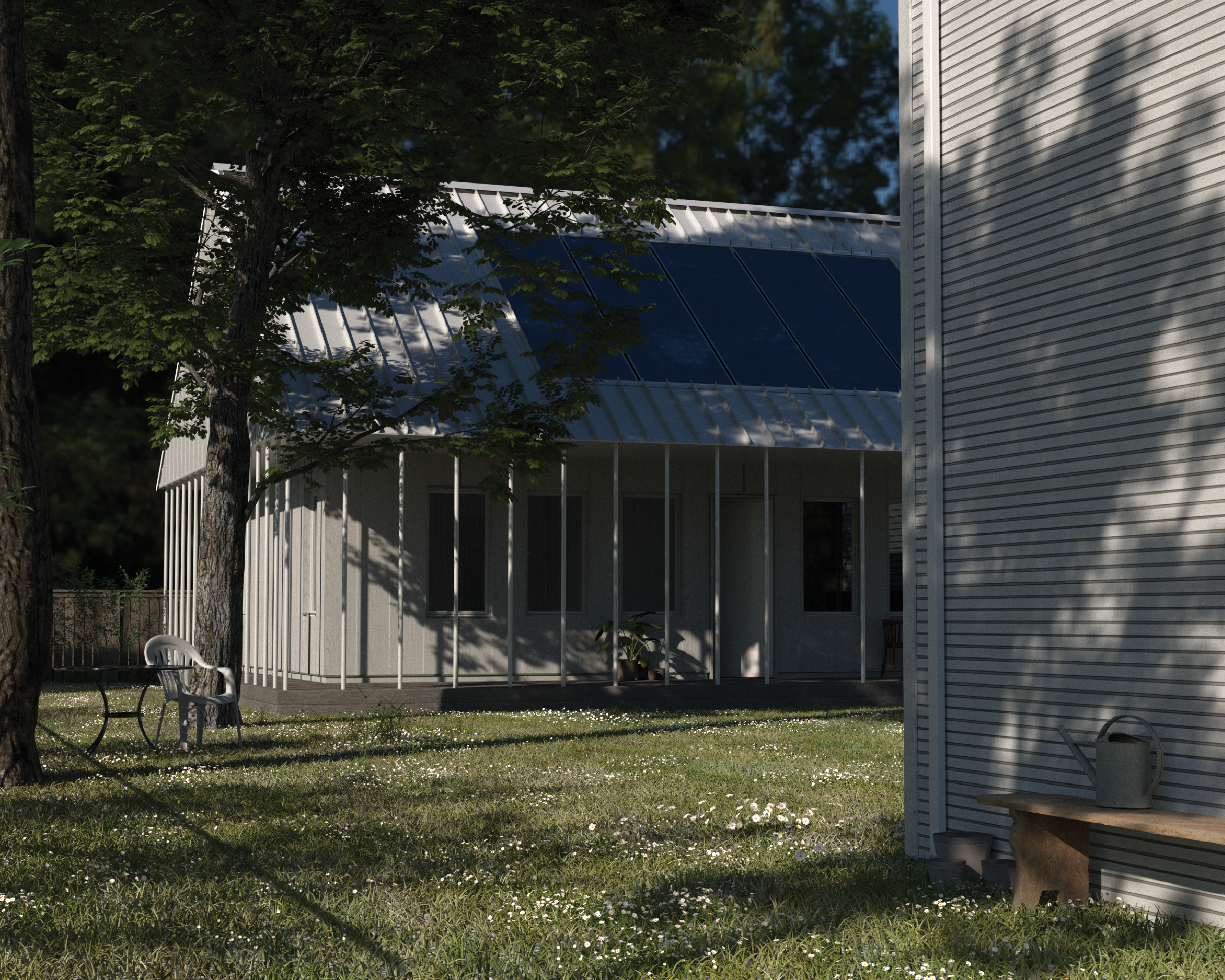
These questions play out in projects and research in both practice and the academy. At Supernormal, projects like the Community Land Trust Housing Design demonstrate careful attention to the ways in which emergent housing types can grow from careful attention and integration with new ownership models. In the ViBE Lab, long-term and ongoing research projects such as Low Energy ADU as Systems-Linked Architecture explore the ways in which thoughtful systems-linked architecture can enable deep transformation in energy use and our relationship with the buildings that produce it. The work is concerned with the design of an accessory dwelling unit (ADU) prototype as well as the design of corollary financing and policy to enable it. This design research, which aims to balance repeatability and contextual sensitivity, enables architectural intelligence to make a positive and direct contribution to essential challenges of the housing crisis. The research takes the form of an ongoing pilot project with the City of Boston.
Take a look at an article about this work in Fast Company.
Elizabeth taught a 2024 options studio at the GSD on this topic and produced a set of original essays and documentation of student work produced within in this studio report.